Tag Archives: Insurance

IMPLICATIONS OF ESTATE DUTY

Estate duty is charged on the dutiable value of the estate in terms of the Estate Duty Act. The general rule is that if the taxpayer is ordinarily resident in South Africa at the time of death, all of his/her assets (including deemed property), wherever they are situated, will be included in the gross value of his/her estate for the determination of duty payable thereon.

The current estate duty rate is 20% of the dutiable value of the estate. Foreigners/non-residents also pay estate duty on their South African property.

To minimise the effects of estate duty you need to understand the calculation thereof. The following provisions apply in determining your liability:

  1. Which property is to be included.
  2. Which property constitutes “deemed property”.
  3. Allowable deductions: the possible deductions that are allowed when calculating estate duty.

Property includes all property, or any right to property, including immovable or movable, corporeal or incorporeal – registered in the deceased’s name at the time of his/her death. It also includes certain types of annuities, and options to purchase land or shares, goodwill, and intellectual property.

Deemed property

A. Insurance policies

i)  Includes proceeds of domestic insurance policies (payable in South Africa in South African currency [ZAR]), taken out on the life of the deceased, irrespective of who the owner (beneficiary) is.

ii)   The proceeds of such a policy are subject to estate duty, however this can be reduced by the amount of the premiums, plus interest at 6% per annum, to the extent that the premiums were paid by a third person (the beneficiary) entitled to the proceeds of the policy. Premiums paid by the deceased himself/herself are not deductible from the proceeds for estate duty purposes.

iii)   If the proceeds of a policy are payable to the surviving spouse or a child of the deceased in terms of a properly registered antenuptial contract (i.e. registered with the Deeds Office) the policy will be totally exempt from estate duty.

iv)  Where a policy is taken out on each other’s lives by business partners, and certain criteria are met, the proceeds are exempt from estate duty.

B.  Benefits payable by pension and other funds by or as a result of the death of the deceased

C.  Donations at date of death
Donations where the donee will not benefit until the death of the donor and where the donation only materialises if the donor dies, are not subject to donations tax. These have to be included as an asset in the deceased estate and are subject to estate duty.

D.  Claims in terms of the Matrimonial Property Act (accrual claim)
An accrual claim that the estate of a deceased has against the surviving spouse is property deemed to be property in the deceased estate.

E. Property that the deceased was competent to dispose of immediately prior to his/her death (Section 3(3)(d) of the Estate Duty Act), like donating an asset to a trust, may be included as deemed property.

Deductions
Some of the most important allowable deductions are:

  1. The cost of funeral, tombstone and deathbed expenses.
  2. Debts due at date of death to persons who have their ordinary residence in South Africa.
  3. The extent to which these debts are to be settled from property included in the estate. This includes the deceased’s income tax liability (which includes capital gains tax) for the period up to the date of death.
  4. Foreign assets and rights:
    a. The general rule is that foreign assets and rights of a South African resident, wherever situated, are included in his/her estate as assets.
    b.  However, the value thereof can be deducted for estate duty purposes where such foreign property was acquired before the deceased became ordinarily resident in South Africa for the first time, or was acquired by way of donation or inheritance from a non-resident, after the donee became ordinarily resident in South Africa for the first time (provided that the donor or testator was not ordinarily resident in South Africa at the time of the donation or death). The amount of any profits or proceeds of any such property is also deductible.
  5. Debts and liabilities due to non-residents:
    a.  Debts and liabilities due to non-residents are deductible but only to the extent that such debts exceed the value of the deceased’s assets situated outside South Africa which have not been included in the dutiable estate.
  6. Bequests to certain public benefit organisations:
    a.  Where property is bequeathed to a public benefit organisation or public welfare organisation which is exempt from income tax, or to the State or any local authority within South Africa, the value of such property will be able to be deducted for estate duty purposes.
  7. Property accruing to a surviving spouse [Section 4(q)]:
    a.  This includes that much of the value of any property included in the estate that has not already been allowed as a deduction and accrues to a surviving spouse.
    b.  Note that proceeds of a policy payable to the surviving spouse are required to be included in the estate for estate duty purposes (as deemed property), but that this is deductible in terms of Section 4(q).
    c.  Section 4(q) deductions will not be granted where the property inherited is subject to a bequest price.
    d.  Section 4(q) deductions will not be granted where the bequest is to a trust established by the deceased for the benefit of the surviving spouse, if the trustee(s) has/have discretion to allocate such property or any income out of it to any person other than the surviving spouse (a discretionary trust). Where the trustee(s) has/have no discretion as regards both the income and capital of the trust, the Section 4(q) deduction may be granted (a vested trust).

Portable R3.5 million deduction between spouses

The Act allows for the R3.5 million deduction from estate duty to roll over from the deceased to a surviving spouse so that the surviving spouse can use a R7 million deduction amount on his/her death. The portability of the deduction will only apply when the entire value of the estate of the first dying spouse is left to the surviving spouse.

Life assurance for estate duty

Estate duty will also normally be leviable on these assurance proceeds.

Source: Moore Stephens’ Estate Planning Guide.

This article is a general information sheet and should not be used or relied on as legal or other professional advice. No liability can be accepted for any errors or omissions nor for any loss or damage arising from reliance upon any information herein. Always contact your legal adviser for specific and detailed advice.

SHOULD YOU ASK FOR A RISK SURVEY FROM YOUR INSURER?

In a recent unreported decision in the High Court of South Africa, North Gauteng High Court, the Court was again faced with the principles regarding disclosure of material information by an insured to its insurer.

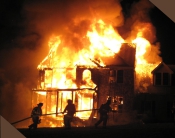
What is interesting about this case is that the insurer was estopped from raising the defence of non-disclosure by placing a burden on the insurer to undertake a certain risk assessment of the property. The facts of the matter are fairly simple. The insured instituted action against its insurer for a loss suffered as a result of a fire on its premises which destroyed the building. The insured further claimed for a loss of rentals. A lot of evidence was led about the underwriting of the policy. What is important is the fact that the insured, through its broker, requested that the property be insured. On 15 March 2010 the property was insured and the broker requested the insurer’s representative to urgently arrange for a survey of the premises. The insurer’s representative then requested the insurer to conduct an urgent survey to determine the risk pertaining to the premises. By 24 May 2010 the survey had still not been conducted. The insurer repudiated the insured’s claim on the basis that it was under the impression that it was insuring certain offices/warehouses, but that the actual tenant of the property conducted the business of fibreglass manufacturing. The insurer was of the view that fibreglass manufacturing is a different risk to that of an office or warehouse, or property developers and suppliers of bedding goods they thought they were insuring.

Our case law has developed to a point where the Short Term Insurance Act has cleared up what test should be applied to establish the materiality of a non-disclosure. It boils down to the simple question as to whether a reasonable person would have considered the facts that should be disclosed reasonably relevant to the risk and assessment thereof, to the insurer. In layman’s terms, if you sit down and apply for insurance, you must consider all facts that a prudent person would disclose to his insurer that may affect the risk. For example, if you have a property and a compost heap that has the risk of catching fire, it must be disclosed to this insurer that you have such a compost heap. Should you fail to do so this may have an adverse effect at claim stage if the compost heap catches fire and damages your property.

What is interesting, however, is that the Court in this instance upheld the insured’s Plea of Estoppel. The insured contended that it was stated to them that an urgent survey would be done.  The insurer did not revert to the insured to inform them that a survey would no longer be conducted, as a consequence of which the insured was entitled to accept that a survey had been done.

What we as consumers can take out of this case is that if you are in doubt as to what should be disclosed, you should request the insurer to conduct a survey of your risk. By doing this you place the burden on the insurer to make sure that they are satisfied with the risk that they are accepting.  This will in all probability raise potential problems for the insurance industry. Understandably, an insurer cannot employ people to assess every risk that it places on its books. If every insured requires such an assessment this can create an administrative and costly nightmare for the insurance industry.

The question should also be raised whether the insured should not from the outset have disclosed that its tenant was in the business of fibreglass manufacturing. Surely it would have been prudent to make such a disclosure at the outset. What the broker has done, however, is to place a burden on the insurer to satisfy itself about the risk, and the insurer failed to do this. That failure, in the Court’s view, entitled the insured to indemnification.

This article is a general information sheet and should not be used or relied on as legal or other professional advice. No liability can be accepted for any errors or omissions nor for any loss or damage arising from reliance upon any information herein. Always contact your legal adviser for specific and detailed advice.

DOG BITES AND THE FINANCIAL RISK IT POSES TO OWNERS

Having received a number of matters that ended up in costly litigation we have decided to point out certain risks to dog owners regarding how liability arises and how to manage such risks and protect oneself against potential liabilities.

When a person is bitten and injured by a dog the injured person can institute action against the owner of the dog to recover his/her damages suffered. Guilt on the part of the owner is not a requirement for liability to attach. If the requirements discussed below are met, the injured person need not prove any guilt on the part of the owner of the dog. Thus, irrespective of whether the owner of the dog was negligent or not, the owner can still be held liable for harm caused by his animal.

What must be proven for a successful claim?

In order to succeed with a claim for damages, the injured person must show that:

  1. The person being sued must have been the owner of the relevant animal at the time of the incident. The mere fact that a person is in control of an animal is not sufficient;
  2. The animal is a domesticated animal, which by implication excludes wild animals;
  3. Injury was caused by the actions of the animal acting contrary to the nature of its kind. The animal must have acted differently to what could be expected of a proper and well-mannered animal of its kind. A dog that bites is deeded by our courts to act contrary to the nature of its kind. Where the animal does not act spontaneously but acts due to incitement or other external factors such as a dog that is being teased etc., the animal does not act contrary to its nature when it reacts aggressively;
  4. He/she had a right to be present at the place where the damage was caused. Where a person enters the property of another without invitation, the person will not be able to succeed with this action because the injured person was unlawfully present on the property.

Defences available to the owner of the dog

Although guilt on the side of the owner is not a pre-requisite, a number of defences are available to the owner of the animal in the case of a claim for damages. Defences available to the owner include the following:

  1. Guilty conduct on the part of the injured person. For example, where the injured person provoked the animal by hitting, throwing objects at or teasing the animal;
  2. Causing of damage by a guilty third party. For example, where another person provokes the dog or hurts or teases the animal with the result that the injured person is attacked;
  3. Provocation by another animal. For example, where another dog attacks the owner’s dog and the owner’s dog in the attack bites the injured person;
  4. Consent to prejudice. Where the injured person expressly or tacitly through his/her conduct consents to prejudice. For example, where a person is bitten by a dog but was pre-warned against the dog and then indicates that he/she is not afraid of dogs – “the dog won’t bite me” – a court should find that the injured person tacitly consented to the prejudice and would the person not be able to claim damages from the owner.

What damages can be claimed?

Where a dog bites a person, the person usually suffers damage, therefore he/she can claim for a wide range of damages, including for pain and suffering, loss of life enjoyment, disfiguration or disability, medical expenses incurred and to be incurred in future, loss of income, etc. All of these damages are in principle recoverable from the owner of the dog. Even a person who witnesses the attack on another person, may as a result of the emotional trauma suffered (and upon proving it) claim for damages.

It is important for owners of dogs to take note of their potential liability for the actions of their animals. This liability may be extensive and owners are encouraged to be serious about the proper control of their animals and to keep the animals within the confines of their property. 

Short Term Insurance

Most short term householder policies will make provision for liability such as this at a minimal cost to the policyholder. Take the time to discuss this with your broker or insurer. Make sure that adequate insurance is in place. A claim such as this can amount to significant proportions. Your insurer can, however, help you cater for such a risk.

This article is a general information sheet and should not be used or relied on as legal or other professional advice. No liability can be accepted for any errors or omissions nor for any loss or damage arising from reliance upon any information herein. Always contact your legal adviser for specific and detailed advice.

WHAT HAPPENS AFTER YOUR HOUSE HAS BEEN BURNT TO THE GROUND?

There are definite steps that a homeowner will need to take if he ever has the traumatic experience of having his house burnt to the ground.

Over and above all the emotional and financial tension it causes in a person and his family, there will be several steps that a homeowner will need to take before the problems accompanying such an experience will be resolved.

The first step that needs to be taken by the homeowner is to report the matter to the nearest police station. The reason for this is twofold. Firstly, by reporting the matter the homeowner will receive the necessary case number as required by most insurance companies. Secondly, the conduct of the third party may turn out to be a crime, for example, arson. Thereafter the complaint will be investigated by the police and handed over to the prosecuting authority that will decide if the third party should be prosecuted or not.

The second step is to report the matter to the insurance company together with the abovementioned case number. Thereafter the insurance company will investigate the claim and decide whether it is going to accept or reject the claim. The insurance policy will determine the ambit of the insurance company’s discretion in deciding whether to accept or reject the insured’s claim. The reason for this is that the insurance policy will determine the rights and obligations between the insurance company and the insured. If the insurance company decides to reject the insured’s claim the insured will have two further options at his disposal. The insured will be able to take the matter to the ombudsman for determination, or he may dispute the matter in a civil court based on breach of contract by the insurance company.

The third step will be to indemnify the insured if the claim is accepted by the insurance company. The amount that the insurance will pay out to the insured will once again be determined by the terms and conditions of the insurance policy. If the insurance company rejects the insured’s claim or if the insured decides not to claim from the insurance company, then the insured will be able to institute action against the third party if he can prove that the house was burned down as a result of the intentional or negligent conduct or omission by the third party or, alternatively, that the house was burned down as a result of a breach of a contractual obligation between the homeowner and the third party, had a contract been in place.

This article is a general information sheet and should not be used or relied on as legal or other professional advice. No liability can be accepted for any errors or omissions nor for any loss or damage arising from reliance upon any information herein. Always contact your legal adviser for specific and detailed advice.